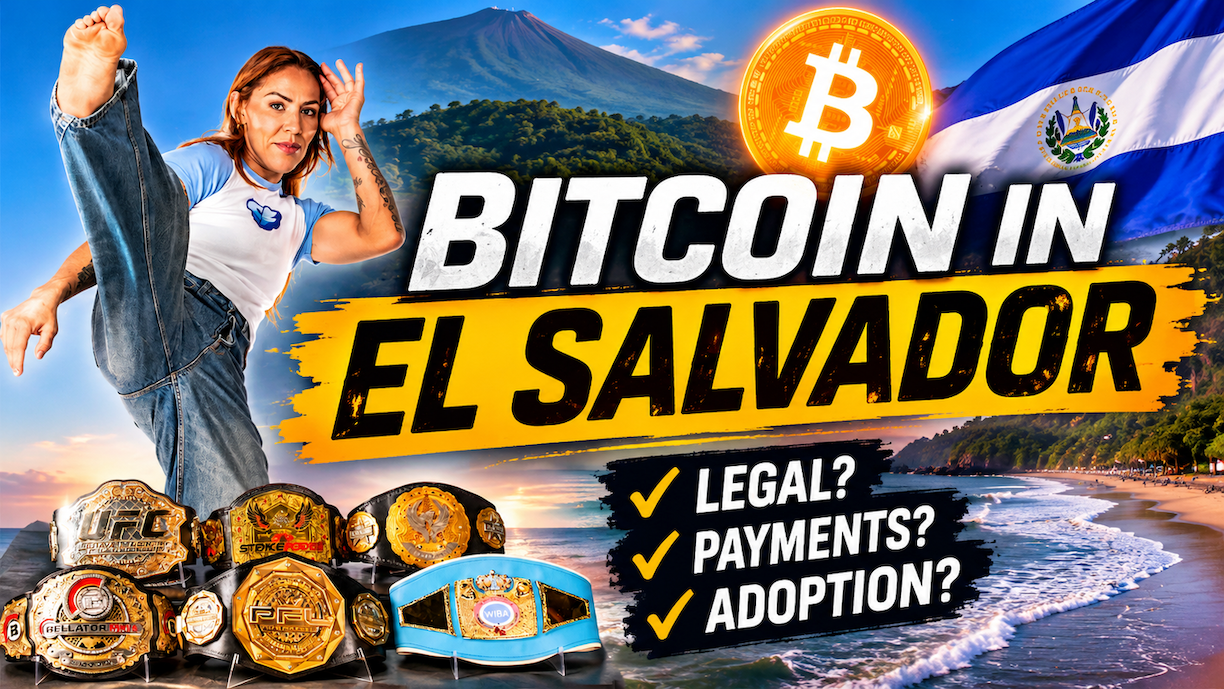
El Salvador became the first country in the world to adopt Bitcoin as legal tender in 2021. Five years later, the Central American nation remains one of the most important real-world experiments in cryptocurrency adoption. But what happened to Bitcoin in El Salvador, and is the country still embracing the world’s largest cryptocurrency?
From Bitcoin Beach and the Lightning Network to government Bitcoin reserves and changes to the country’s Bitcoin Law, El Salvador offers an opportunity to understand what happens when Bitcoin moves beyond investment portfolios and enters everyday life.
For anyone interested in Bitcoin adoption, decentralized money, financial freedom, or the future of cryptocurrency, El Salvador’s experience provides valuable lessons.
Why Did El Salvador Adopt Bitcoin in 2021?
On September 7, 2021, El Salvador made history by becoming the first nation to recognize Bitcoin as legal tender alongside the United States dollar.
President Nayib Bukele promoted the initiative as an opportunity to modernize the country’s financial system, increase financial inclusion, attract international investment, and reduce the cost of sending money across borders.
One of the biggest motivations was the importance of remittances.
Millions of Salvadorans have family connections outside the country, particularly in the United States. Money sent home by relatives represents a significant part of El Salvador’s economy.
Traditional international money transfers can involve fees, delays, and intermediaries.
Bitcoin offered a potential alternative: a decentralized payment network capable of transferring value across international borders without relying on traditional banking infrastructure.
The government also hoped Bitcoin adoption would create new opportunities for tourism, technology businesses, and foreign investment.
Is Bitcoin Still Legal in El Salvador in 2026?
Yes. Bitcoin remains legal to own, trade, and use voluntarily in El Salvador in 2026. However, businesses are no longer generally required to accept it as payment.
This distinction is important because the country’s Bitcoin laws have changed significantly since their original introduction.
In January 2025, El Salvador approved amendments removing mandatory Bitcoin acceptance for private businesses.
The reforms were associated with a $1.4 billion financing agreement with the International Monetary Fund.
Under the revised framework, Bitcoin transactions are voluntary, and the US dollar remains the dominant currency for everyday economic activity.
For tourists and Bitcoin enthusiasts, this means it may still be possible to purchase goods and services using Bitcoin, but merchants can choose whether they want to accept it.
El Salvador has not banned Bitcoin. Instead, its government has shifted toward a less interventionist approach to Bitcoin payments while strengthening oversight of digital assets.
What Is Bitcoin Beach in El Salvador?
Before Bitcoin became part of national economic policy, a small coastal community helped demonstrate how cryptocurrency could function as everyday money.
El Zonte, a surfing destination on El Salvador’s Pacific coast, became internationally recognized as Bitcoin Beach.
The project introduced Bitcoin payments and community-based financial education, helping local residents and businesses experiment with digital currency.
Bitcoin Beach became an important example of grassroots cryptocurrency adoption.
Rather than focusing exclusively on Bitcoin as a speculative investment, the community explored how it could be used to purchase meals, pay local merchants, and transfer money between individuals.
The project also helped popularize the use of Bitcoin’s Lightning Network.
Although recent reports suggest Bitcoin spending has declined at some local businesses, El Zonte remains an important destination for people interested in the history of Bitcoin adoption.
For travelers researching Bitcoin tourism in El Salvador, Bitcoin Beach offers a distinctive combination of surfing, local culture, and cryptocurrency history.
Can You Pay With Bitcoin in El Salvador Today?
Yes, but Bitcoin acceptance varies depending on the business and location.
Some tourism-oriented establishments and cryptocurrency-friendly merchants may accept Bitcoin, particularly in communities associated with the country’s Bitcoin movement.
However, Bitcoin is not universally accepted.
Visitors should carry US dollars or have access to traditional payment methods rather than relying exclusively on Bitcoin.
The country’s original Bitcoin experiment envisioned widespread cryptocurrency payments, but actual adoption has been more limited.
Research cited by the International Monetary Fund found that Bitcoin accounted for a relatively small share of everyday commercial transactions.
A 2024 university survey found that approximately 8.1% of Salvadorans reported using Bitcoin to purchase goods or services that year.
The difference between Bitcoin’s international popularity and its everyday use in El Salvador highlights an important distinction: owning Bitcoin and spending Bitcoin are two different behaviors.
Many Bitcoin supporters prefer to save their holdings rather than use them for routine purchases.
How Does the Bitcoin Lightning Network Work in El Salvador?
One of the most interesting technologies associated with Bitcoin adoption in El Salvador is the Lightning Network.
Bitcoin’s main blockchain is designed to prioritize security, decentralization, and verification of transactions.
However, directly recording every small purchase on the blockchain can be inefficient, particularly when network transaction fees increase.
The Lightning Network is a payment system built on top of Bitcoin that allows participating users to make fast, low-cost transactions through payment channels.
This makes Lightning particularly relevant for small purchases.
For example, a customer buying coffee with Bitcoin may be able to complete a Lightning payment in seconds rather than waiting for confirmation on Bitcoin’s main blockchain.
Lightning payments also demonstrate an important concept in Bitcoin’s development: different technologies can provide different functions while remaining connected to the same underlying monetary network.
For countries interested in using Bitcoin as a medium of exchange, this type of infrastructure could be important.
However, successful adoption also requires reliable internet access, user-friendly wallets, merchant participation, and sufficient payment liquidity.
What Happened to the Chivo Bitcoin Wallet?
When El Salvador launched its Bitcoin initiative, the government introduced the Chivo Wallet to encourage cryptocurrency adoption.
Eligible Salvadorans were offered a $30 Bitcoin incentive for registering.
The wallet was designed to support Bitcoin and dollar transactions, with government-backed infrastructure intended to simplify conversions.
Chivo became one of the most recognizable elements of the country’s Bitcoin experiment.
However, adoption proved challenging.
Some users downloaded the application primarily to claim the promotional incentive, while others continued using traditional banking services or cash.
Concerns about technical reliability, public spending, and financial oversight also attracted attention.
By October 2026, the IMF reported that majority ownership and control of Chivo had been transferred to a private operator.
This represents a significant change from the original government-led approach.
The future of Bitcoin payments in El Salvador may increasingly depend on private businesses, independent wallet providers, and voluntary consumer adoption rather than direct government incentives.
Does El Salvador Still Buy Bitcoin?
El Salvador’s government Bitcoin reserves have become one of the most closely watched aspects of the country’s cryptocurrency strategy.
President Bukele’s administration began acquiring Bitcoin after the country introduced its original Bitcoin Law.
Supporters viewed the purchases as a long-term investment in a scarce digital asset.
Critics questioned the risks of exposing public finances to an asset known for substantial price volatility.
In February 2025, the IMF reported that El Salvador held approximately 6,070 BTC.
However, the country’s reserve policies have since become more complicated.
Under its IMF-supported economic program, El Salvador agreed to restrictions on public-sector Bitcoin accumulation.
In October 2026, the IMF stated that no additional Bitcoin accumulation was expected beyond documented donations.
This distinction matters because increases in publicly tracked wallet balances do not necessarily represent new purchases using government funds.
Bitcoin transfers between government-controlled wallets can also affect the balances visible on individual blockchain addresses.
Anyone researching El Salvador’s Bitcoin holdings should distinguish between confirmed government purchases, donations, transfers, and changes in the market value of existing reserves.
Has Bitcoin Helped El Salvador’s Economy?
Bitcoin has unquestionably helped attract international attention to El Salvador.
The country’s cryptocurrency experiment generated global media coverage and established its reputation as a destination for Bitcoin enthusiasts.
Bitcoin conferences, technology businesses, cryptocurrency tourism, and international investment discussions have all contributed to that visibility.
However, determining Bitcoin’s direct economic impact is more complicated.
El Salvador’s tourism industry has expanded, but factors such as improved security conditions, infrastructure development, and the recovery of international travel also influence visitor numbers.
The IMF has reported that Bitcoin’s contribution to financial inclusion and digital remittances has been limited.
This does not mean that every aspect of the experiment has failed.
It means that increased international recognition, technological experimentation, and measurable improvements in everyday financial access should be evaluated separately.
El Salvador’s experience shows that making a technology legally available does not automatically guarantee widespread adoption.
What Can Other Countries Learn From El Salvador’s Bitcoin Experiment?
El Salvador provides several important lessons for governments, businesses, and individuals studying cryptocurrency adoption.
Financial inclusion requires more than technology. Giving people access to a Bitcoin wallet does not necessarily mean they will use it regularly. Education, trust, connectivity, and practical financial needs all influence adoption.
Bitcoin payments and Bitcoin investment serve different purposes. Some people may prefer Bitcoin as a long-term store of value while continuing to use dollars for daily purchases.
Merchant adoption depends on consumer demand. Businesses are more likely to support Bitcoin payments when customers consistently request them.
Regulatory frameworks matter. Consumer protection, transparency, custody arrangements, and financial oversight become increasingly important when digital assets interact with national financial systems.
Decentralized networks can operate independently of government policy. Even when governments reduce their involvement, individuals can continue using Bitcoin where permitted.
These lessons extend beyond El Salvador to countries considering cryptocurrency regulation, digital payments, and alternative financial infrastructure.
Is El Salvador Still a Bitcoin-Friendly Country?
El Salvador remains one of the world’s most recognizable Bitcoin destinations, even though its policies have changed.
Bitcoin ownership and voluntary payments remain legal, digital asset businesses continue operating under regulatory supervision, and Bitcoin Beach remains an important part of cryptocurrency history.
At the same time, everyday Bitcoin spending has not achieved the widespread adoption originally envisioned.
For Bitcoin supporters, the country demonstrates both the potential and the challenges of introducing decentralized money into an established economy.
For critics, it raises questions about the effectiveness of government-led cryptocurrency adoption.
Both perspectives contribute to a larger conversation about the future of money.
The Future of Bitcoin in El Salvador and Around the World
El Salvador’s Bitcoin story is far from over.
What began as a historic legal tender experiment has evolved into a broader discussion about voluntary adoption, financial technology, regulation, and the relationship between governments and decentralized digital assets.
The country’s experience demonstrates that Bitcoin adoption cannot be measured by legislation alone.
Long-term success depends on whether individuals and businesses find genuine value in using the technology.
Whether Bitcoin ultimately becomes a widely used global payment network, a major long-term savings asset, or a combination of both, El Salvador will remain an important case study.
For anyone trying to understand Bitcoin’s future, the question is no longer simply whether a country can adopt Bitcoin.
The bigger question is what happens after adoption—and whether people choose to keep using it.
Frequently Asked Questions About Bitcoin in El Salvador
Is Bitcoin legal in El Salvador in 2026?
Yes. Bitcoin remains legal to own and use voluntarily. Businesses are no longer generally required to accept it as payment.
What was the first country to adopt Bitcoin?
El Salvador became the first country to adopt Bitcoin as legal tender on September 7, 2021.
What is Bitcoin Beach?
Bitcoin Beach is a community-based Bitcoin initiative in El Zonte, El Salvador, known for promoting cryptocurrency payments, financial education, and Lightning Network adoption.
Can tourists use Bitcoin in El Salvador?
Yes, tourists can use Bitcoin at participating businesses. However, acceptance varies, and travelers should also carry US dollars or traditional payment methods.
What is the Chivo Wallet?
Chivo is a Bitcoin and dollar wallet originally introduced by El Salvador’s government in 2021. Majority ownership and control were transferred to a private operator by 2026.
Why did El Salvador change its Bitcoin law?
The 2025 changes formed part of economic reforms associated with an IMF financing agreement and reduced mandatory Bitcoin acceptance and public-sector cryptocurrency exposure.
Does El Salvador use Bitcoin or the US dollar?
The US dollar remains the dominant currency for everyday transactions. Bitcoin can also be used voluntarily where accepted.


Latest from the blog
Tuesday, 3rd Nov, 2026
Jake Paul vs. Cedric Doumbe Dubai Tickets: Prices, Presale Dates and How to Attend the Christmas Eve Boxing Fight

UFC Vegas 123 Results: Tom Nolan Stops Renato Moicano in Controversial TKO as Referee Decision Sparks Outrage

Why Is Bitcoin Censorship Resistant? Cris Cyborg Explains Financial Freedom

BTC Prague 2027 Discount Code CYBORG: Save on Tickets to Europe’s Biggest Bitcoin Conference

Valentina Shevchenko Launches Limited-Edition Whiskey: UFC Legend Releases Just 170 Bottles of Warbringer Bullet Edition
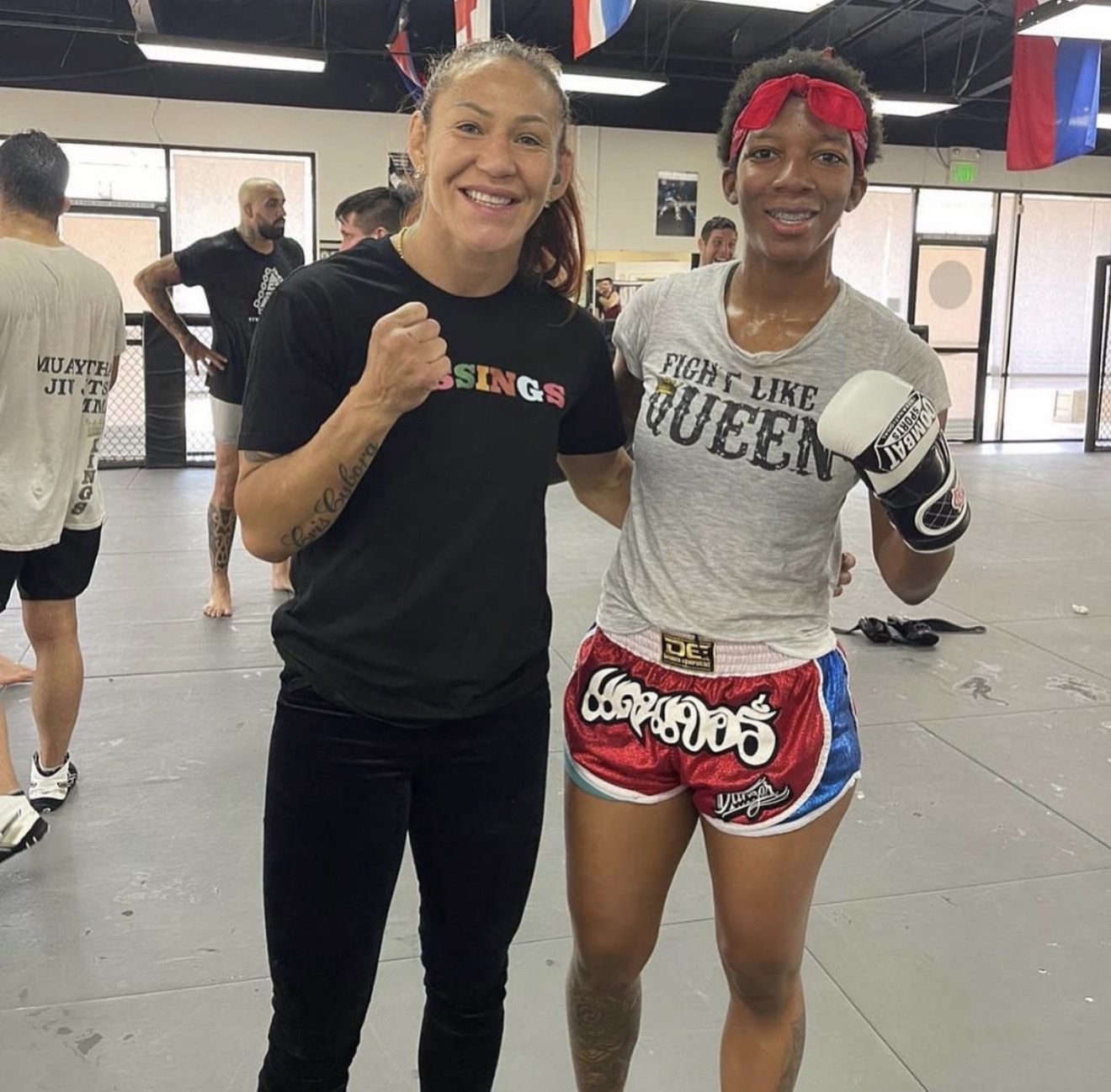
Joselyne Edwards Named UFC 334 Backup for Kayla Harrison vs. Amanda Nunes, but Is Cris Cyborg the Bigger Fight?
You might also like
Sunday, 3rd Jan, 2021
FREE FIGHT| NCF 7 Nacão Cyborg Road to Bellator MMA Matheus Correria Vs Alicate

Bellator MMA fighter Cris “Sunshine” Lencioni needs our help!

ATTN. All Female Featherweight Fighters UFC Ultimate Fighter to hold tryouts in Las Vegas May 22nd

Amanda Nunes defeats Irene Aldana by Decision then retires UFC 289

Join presale list for Tickets to Cris Cyborg’s first professional boxing fight in Curitiba Brazil